Inside the Sing Grenada Music Camp — A National Investment in Talent, Culture, and Capacity
It started with a single, hesitant note. A breath before the first beat. Then other voices joined in. Ultimately, the room was filled with rhythm, harmony, and a sense that the future was being written in real time.
This was the energy at the Sing Grenada Music Camp 2025, a youth development initiative hosted by the Grenada Office of Creative Affairs (GOCA) as part of our national mandate to build infrastructure and opportunity within the cultural and creative sectors. Designed not just to teach music, the camp was created to empower young Grenadian creatives, strengthen national capacity for the cultural and creative industries, and amplify the voice of a rising generation.
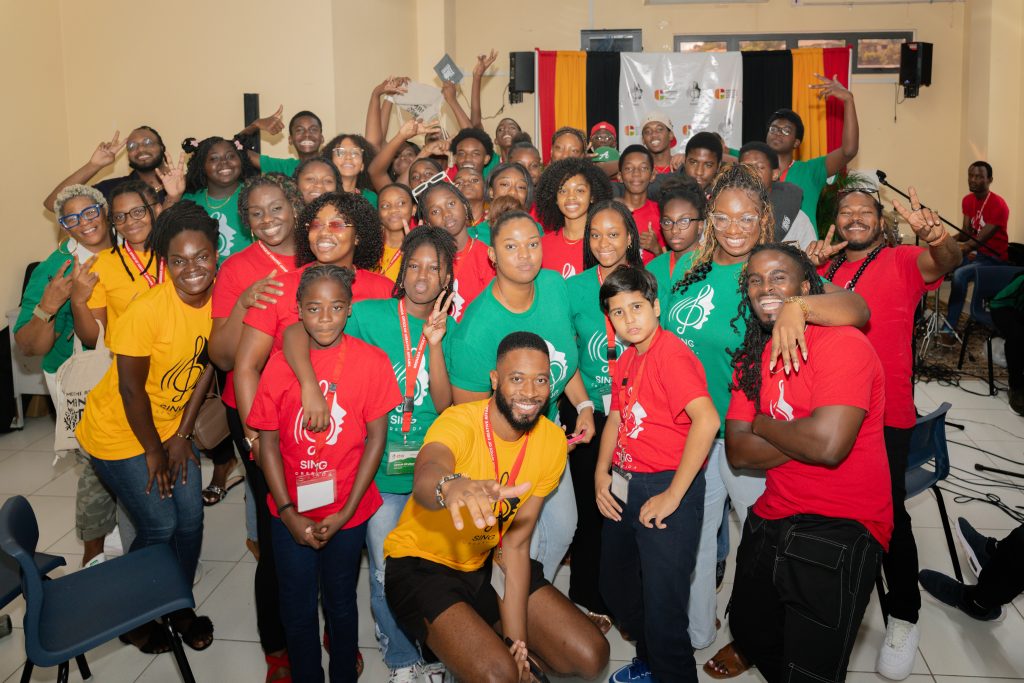
Over the course of two transformative weeks, thirty-five students aged eight to eighteen gathered at TAMCC to write, arrange, and record original songs. These songs, written in collaboration with coaches and producers, will be released as part of the upcoming Sing Grenada EP, the first of its kind.
But the music is just the beginning.
From Vision to Framework
The idea for Sing Grenada emerged from a conversation among vocalist and coach Jeverson Ramirez, camp coordinator Karen Pilgrim, and camp support lead Joel Normdarkham. Inspired by Jeverson’s experience as a young musician navigating a system with few formal resources, they envisioned a space for creative mentorship that felt both fun and industry-relevant.
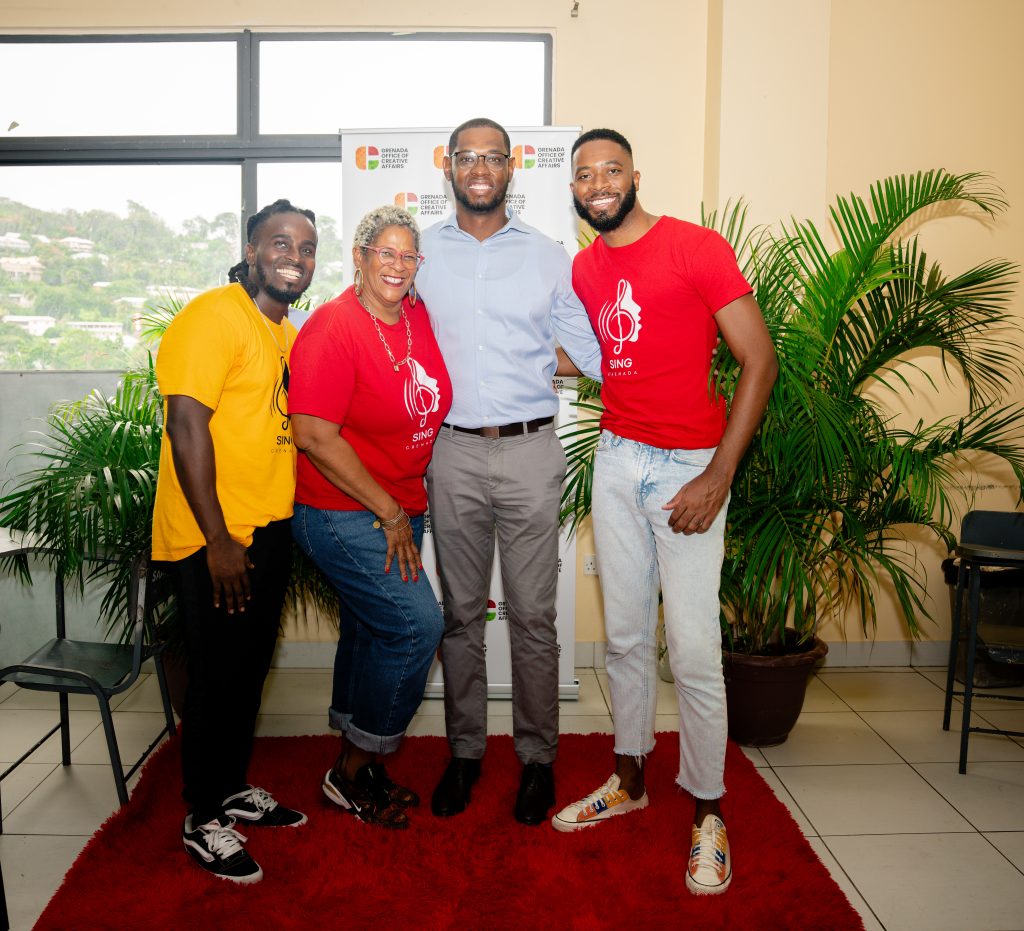
With GOCA’s support, the camp was quickly adopted as one of several junior incubator projects under the organisation’s strategic objectives. These incubators are designed to provide early-stage exposure and foundational skills across different creative disciplines, forming part of our broader commitment to long-term sector development.
The goal was clear: to foster an environment where young creatives could access professional-level training, collaborate meaningfully with peers and mentors, and express themselves with confidence, while grounding the experience in cultural identity and national purpose.
A Curriculum with Intention
Students participated in songwriting sessions, vocal coaching, instrumental tutoring, music theory classes, and music business workshops that covered topics such as copyright, distribution, and storytelling. The lessons were deliberately experiential and rooted in real-world practices, equipping participants with both technical knowledge and industry awareness.
Coaching was delivered by a team of producers and musicians, including Sabrina Francis, Ryan DeRiggs, Godson Browne, Alix Aird, Nordley Frederick, Zorina Andall, and others.
Reflecting on the students’ work, Sabrina noted, “These kids are old souls. The music they write, the themes, the structure — it’s beyond their years.”
The students asked sharp questions during sessions with visiting artistes and professionals. They were hungry, not just to perform, but to understand the business, the culture, and the responsibility of being a creative voice in Grenada.
Throughout the camp, they were visited by local icons such as Tallpree, Mr Killa, V’ghn, Luni Spark & Electrify, Muddy, and Terra De Governor, each offering not just encouragement but also valuable insights that added depth and relevance to what was being taught.
As Mr Killa told them, “You may learn from me, but I want you to be better than me. You are the champions.”
Behind the scenes, professionals like Yvette Noel-Schure, Kered Clement, and Tiffany Strachan helped anchor the broader conversation around storytelling, media, and sustainable careers.
Rising Voices, Real Growth
The students came from all corners of Grenada, each carrying a different story, each adding a note to the symphony.
There was Shenice, 13, who began with a recorder in primary school and wasn’t initially drawn to music. However, under the patient guidance of her instructor, she has now become deeply invested in learning the clarinet and developing her voice.
Adrian, just 8 years old, fearlessly conquered drum kits three times his size, commanding the space with natural rhythm and a wide grin.
Caila, a classical soul at 13, brought seven years of piano training, spoke both Spanish and English, and was often found humming along to playlists filled with Billy Joel, George Michael, and ABBA.
Anuj, 11, focused on the violin but was curious about everything, from songwriting to camera gear. His energy flowed freely between jam sessions and tech setups, eager to learn and eager to share.
And then there was Ethan, 15, with no formal music training, but a personality that lit up his audition video. The team welcomed him as the camp’s official content creator. For two weeks, he interviewed fellow students and coaches, hosted showcases, and captured the camp’s spirit from behind the scenes.
“At first, I felt like I didn’t belong,” Ethan shared. “But then I realised there are different ways to be creative.”
Others, like Kaydeen, discovered a love for music they didn’t expect. And Karah, 13, flourished with the support of her peers and the consistent encouragement of her coaches.
After just one week, transformation was already visible: bolder posture, stronger voices, deeper friendships. By the end of the second, it was clear that something lasting had taken root.
A Safe Space to Grow
The camp was led with warmth and discipline by Karen, who opened each day with a group rendition of “Yes You Can” by Donnie McClurkin, remixed to declare “Yes, I Can.” One of her guiding principles became a camp mantra: “If you’re early, you’re on time. If you’re on time, you’re late. And if you’re late… that’s unacceptable.”
Students helped establish their own community rules, learned to hold themselves accountable, and showed up each day with purpose and pride.
Parents expressed comfort in knowing their children were in a space that valued both creative expression and structure. Students were not only becoming better musicians, but also more confident individuals with a clearer sense of self and culture.
A National Strategy in Motion
Sing Grenada is not an isolated initiative. It is part of GOCA’s long-term strategy to develop and professionalise Grenada’s cultural and creative industries. By anchoring projects like this within a broader policy framework, we ensure that creative development isn’t just reactive, but also sustainable and scalable.
Through strategic coordination, oversight, and resourcing, we collaborated closely with camp coaches and facilitators to develop a model that can be adapted and expanded across various disciplines. The success of this camp demonstrates the power of coordinated investment and purpose-driven design, as well as how young people, when equipped with the right tools, can shape the future of our creative industries.
The upcoming Sing Grenada EP and its accompanying visualisers will serve as both a product and a promise, evidence that young creatives, when empowered, can shape work that is meaningful, marketable, and nationally significant.
With Gratitude
Perhaps no line captures the camp’s impact better than this, overheard during the final showcase:
“You can’t help but feel proud — not just of them, but of what we’ve built together.”
To every coach, producer, visiting professional, partner, and parent who made Sing Grenada possible, the Grenada Office of Creative Affairs extends sincere thanks. This project is more than a programme, it is part of a growing movement to place culture and creativity at the heart of national development.
To the students, thank you for reminding us why this work matters. You are not just the future of music in Grenada. You are its present.
And to the broader community, the rhythms we invest in today will resonate far beyond this moment.
The future isn’t waiting. It’s already singing.